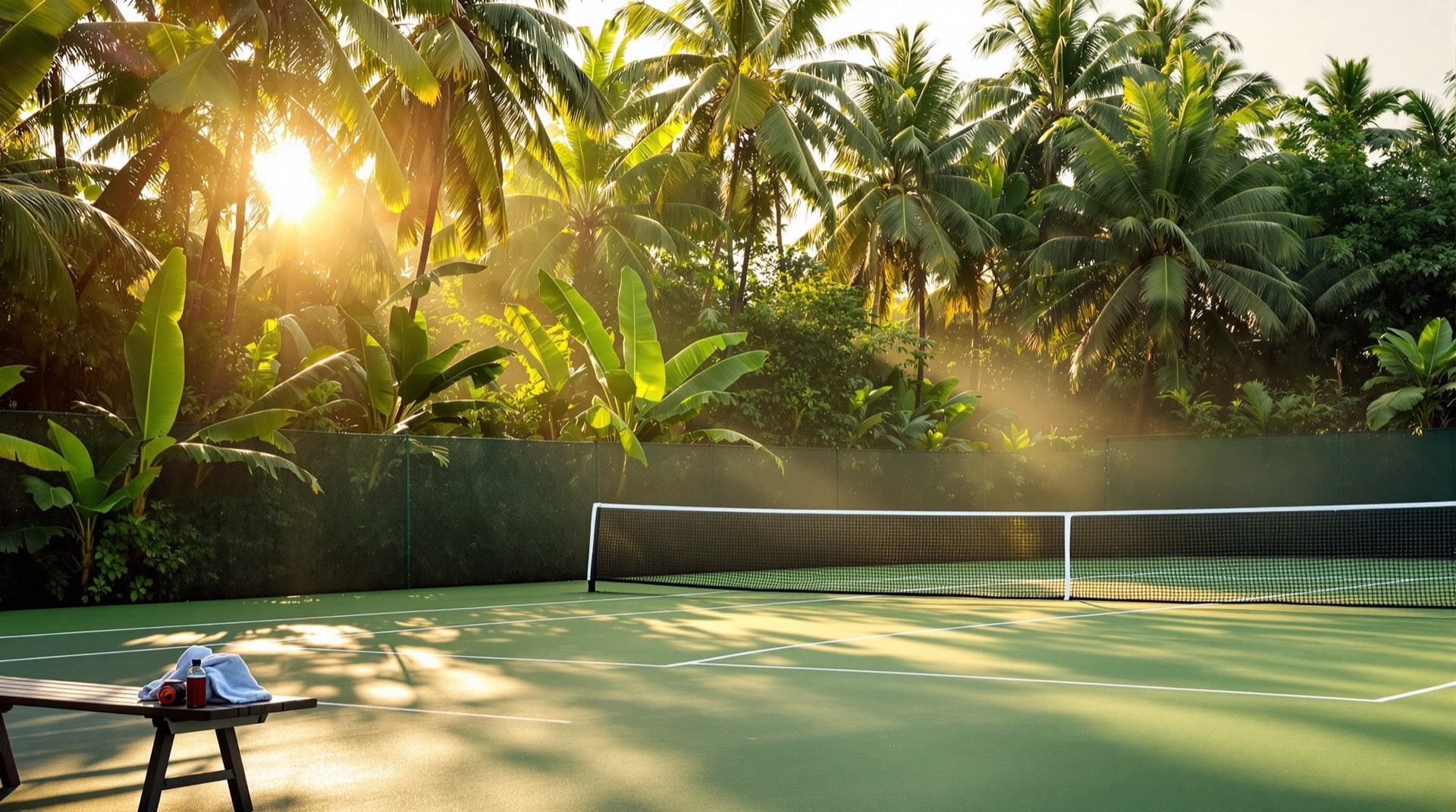
Heat is a tennis problem in a way it is not a problem for most sports, because tennis matches have no fixed length. A close three-setter in humid conditions can run past three hours, almost all of it outdoors, with only ninety seconds at changeovers. There is no substitution, no clock running down, and no obligation on anybody to stop you.
Humidity is the part that catches people out. In dry heat, sweat evaporates and takes heat with it — the body's primary cooling system works. In high humidity the air is already close to saturated, evaporation slows sharply, and you sweat copiously while cooling poorly. This is why 32°C at 85% humidity is far more dangerous than 36°C in dry air, and why players who cope well in a dry summer can be caught out in a tropical one.
Hydration, without the mythology
The useful framing is simple: you cannot drink your way out of a fluid deficit during a match, so the work is done before and after.
- Before. Arrive hydrated. Drinking a large volume in the ten minutes before a match mostly produces a heavy stomach; drinking steadily across the preceding hours works. Pale-straw urine is a crude but serviceable check.
- During. Drink at every changeover, in moderate amounts, whether or not you feel thirsty — thirst is a lagging indicator. Little and often beats a large volume at the point when you finally notice.
- After. Replace over the following hours, with sodium alongside the fluid.
On electrolytes: for a short, cool session, water is fine. For sustained play in the heat — beyond roughly an hour of hard work, and particularly if you are a heavy or salty sweater, which shows as white residue and gritty stiff clothing — replacing sodium matters, because replacing large fluid losses with plain water alone dilutes blood sodium. The American College of Sports Medicine publishes accessible guidance on exercise fluid replacement, and it is the sensible place to start rather than marketing copy.
Overdrinking is a real if less common risk. Drinking far beyond fluid losses across a long hot match can cause exercise-associated hyponatraemia, which is serious. The target is replacing what you lose, not drinking as much as possible.
Use warm-up as a conditions check
The first ten minutes should test more than strokes. Notice how quickly sweat accumulates, whether it is evaporating, how hot the court feels through the shoes, and whether a breeze reaches both ends. Shade may cover one chair but not the other. These observations turn a general forecast into the conditions of this particular court.
Use the check to set a conservative opening pace. A warm-up that already feels unusually demanding is evidence that recovery between points and changeovers must be deliberate from the start. Put drink, towel, spare shirt and any cooling supplies where they can be reached without unpacking a bag. Small logistical delays consume much of a short changeover.
Partners should agree before play that either can call a longer break or stop the session without argument. That matters because judgement becomes less reliable as heat illness develops. Watch for a change in movement, speech, coordination or responsiveness rather than waiting for a collapse. If ordinary movement in the warm-up is producing symptoms, the sensible decision is not to begin.
Cooling that actually works
Ninety seconds is short, so spend it well:
- Sit down, in shade if it exists. Standing in the sun at a changeover is wasted recovery.
- Ice or a cold wet towel on the neck, face and forearms. These areas shed heat efficiently, and the perceptual relief is genuine.
- A cold drink rather than a cool one — cold fluids draw some heat internally as well as replacing volume.
- Change your shirt. A saturated shirt in humid air has stopped helping you evaporate anything. This is the single most underrated intervention in humid conditions.
- Wear light, loose, pale, genuinely breathable clothing, a hat or visor, and sunscreen. Sunburn impairs the skin's ability to thermoregulate.
Pacing a match in the heat
Tactics should change with the conditions, and most players never adjust.
- Shorten points deliberately. Serve-and-volley patterns, first-strike returns and approaching on anything short are worth more when a twenty-shot rally costs disproportionately.
- Use the full time between points. You are entitled to it; take it, walk to the back fence, breathe through the nose, reset.
- Schedule sensibly. Early morning and late afternoon are cooler and lower in ultraviolet. The middle of the day is the worst time to play and the most commonly booked.
- Acclimatise gradually. Heat adaptation is real and takes one to two weeks of progressive exposure. Arriving in a hot, humid climate and playing a full match on day one is the classic way to have a bad experience.
The warning signs, and where the line is
Learn these, because the person best placed to notice is you, and heat illness impairs exactly the judgement you would need to notice it.
Heat exhaustion — heavy sweating, cool clammy skin, weakness, dizziness, nausea, headache, cramping, a fast weak pulse. The response is to stop playing, get into shade or air conditioning, loosen clothing, apply cool wet cloths, and sip fluids. Do not finish the set.
Heat stroke — a medical emergency. Body temperature very high, skin possibly hot and dry or still sweating, confusion, slurred speech, agitation, loss of coordination, loss of consciousness. Call emergency services immediately, move the person into shade, and cool them aggressively with whatever is available while waiting. Do not give fluids to somebody who is confused or not fully conscious.
The distinction that matters practically: altered mental state means emergency. Detailed public guidance on recognising and responding to heat illness is published by the US Centers for Disease Control and Prevention.
Nothing here is medical advice, and it is not a substitute for a clinician. If you have a cardiovascular condition, take medication affecting fluid balance or thermoregulation, or have had heat illness before, that is a conversation to have with your doctor before playing hard in hot conditions rather than after.
One last cultural note, since it costs matches and occasionally more: there is no credit for playing through it. Retiring from a club match in dangerous heat is an unremarkable decision that experienced players make routinely.