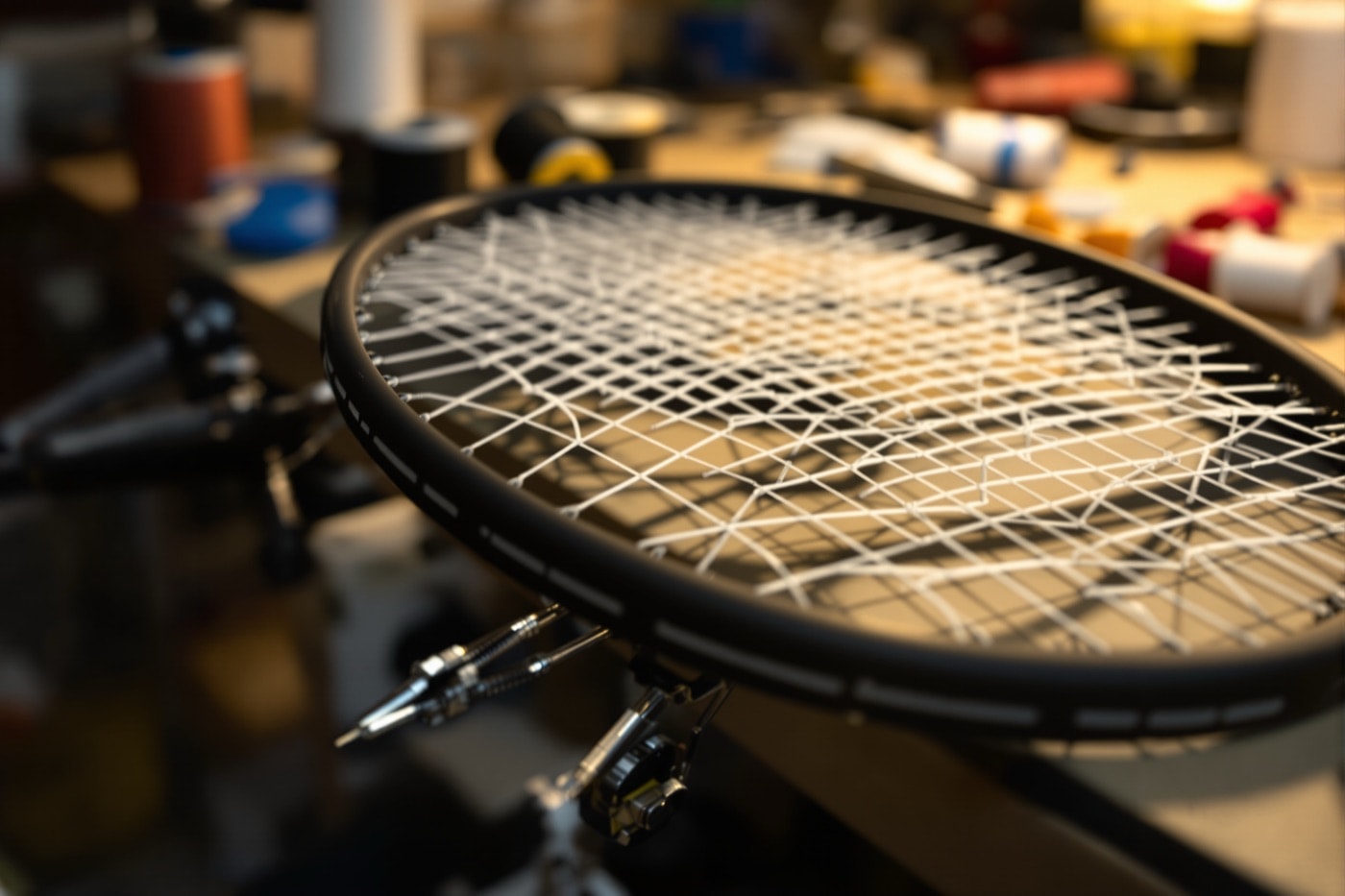
Strings are the cheapest meaningful change available to a tennis player and the least understood. The frame is a lever; the string bed is the surface that actually touches the ball. Change the string bed and you change the racket's power, spin, comfort and control more than most frame swaps would — for the price of a couple of coffees.
If nothing else on this page sticks, take this: the string in your racket right now is probably dead. Polyester in particular loses tension and elasticity long before it breaks, and playing on dead poly is both the most common cause of "my racket suddenly feels wrong" and a genuine contributor to arm strain.
The four material families
Polyester ("poly" / co-poly)
A stiff monofilament. Low power, high control, excellent spin because the main strings slide sideways under a brushing swing and then snap back, and it survives aggressive hitting without breaking quickly. It is the default for players with fast, full swings.
Its two costs are significant. It is harsh — the stiffest common string, and unforgiving on an arm that is already complaining — and it loses tension fast, dropping measurably in the first hours of play and continuing steadily thereafter. A poly job that has not broken after four months is not thrifty; it is a stiff, dead board.
Multifilament
Many fine fibres bundled together, designed to imitate natural gut. Soft, comfortable, powerful, easy on the arm and very good at holding tension. It provides less spin than poly and it frays and breaks sooner under heavy topspin. For a club player with a moderate swing, or anybody with elbow history, this is very often the right answer and very often not the one they are using.
Synthetic gut
A single solid core with an outer wrap. The middle of the road on every axis and inexpensive. Nothing about it is exceptional, which makes it a sensible baseline: string with it, play a month, and you will know which direction you actually want to move.
Natural gut
Made from cattle intestine. It remains the best string in existence on the measures that matter most — it holds tension better than anything else, is the most comfortable, and gives outstanding feel and power. It is expensive and it dislikes moisture, which limits it in humid climates and rules it out in rain.
Hybrids
Different strings in the mains and crosses, usually poly in one direction and a softer string in the other. The common setup — poly mains with a soft cross — keeps most of poly's spin and control while removing some of its harshness. It is a genuine compromise rather than a marketing one, and it is worth trying before abandoning poly entirely.
Gauge
Gauge is thickness, and the numbering runs backwards: a higher number is a thinner string. A thinner string bites the ball more, gives more spin and more feel, and breaks sooner. A thicker string lasts longer and plays a little flatter and duller. Most adult players sit between 16 and 17 gauge; move thinner for spin and feel, thicker if you break strings weekly.
What tension actually does
Tension is quoted in kilograms or pounds and most frames carry a recommended range on the throat. Within that range:
- Lower tension = a trampolining string bed = more power, more depth, more comfort, and less predictable control. Also, in modern strings, often more spin, because the mains move more freely.
- Higher tension = a firmer bed = more control and a shorter, more precise ball, with less power and a harsher feel.
The old rule "string tighter for control" is only half true. If you are hitting long because the ball is flying, tighter helps. If you are hitting long because you have insufficient spin to bring the ball down, tighter makes it worse — you need more spin, which usually means looser and a more brushing swing path.
How to test a change without fooling yourself
Almost nobody does this properly, which is why almost everybody's opinion about strings is unreliable.
- Change one variable. New material at the same tension, or the same material at a different tension. Never both.
- Move tension in meaningful steps. A one-kilogram or two-pound change is below the threshold most players can detect. Move two kilograms or four pounds so the result is legible.
- Give it two full sessions. A new string bed feels alien for the first twenty minutes and then settles. First-set impressions are noise.
- Judge on outcomes, not feel. Feel is highly suggestible. Ask instead: are my rally balls landing deeper or shorter? Am I framing more or fewer? Does my arm feel worse the next morning? Those questions have answers.
- Write it down. String, gauge, tension, date. Without a record you cannot repeat a good setup, and you will discover this at exactly the wrong moment.
How often to restring
The traditional guideline is to restring as many times per year as you play per week — a twice-weekly player restrings twice a year. It is a floor, not a target, and it badly understates the case for polyester, which should be replaced every thirty to forty playing hours regardless of whether it has broken.
If your elbow or shoulder has started grumbling, the string bed is the first place to look, before technique and before the frame. A softer string at a lower tension is the least disruptive change you can make, and the injury prevention page covers what to do if that is not enough. String and racket specifications must also stay within the equipment rules published by the ITF technical department, which is worth a glance before experimenting with unusual patterns.